Make we talk true: no be everybody for Nigeria dey comfortable to dey communicate with technology for English. Sometimes, na our mother tongue dey help us explain wetin dey our mind well-well. Na here Vocalistic AI wan make difference.
Vocalistic AI na voice artificial intelligence platform wey dey aim to make AI understand and communicate in Nigerian languages, including Yoruba, Igbo, Hausa and Pidgin.
According to the platform’s introduction, the goal na to make voice AI understand the way Nigerians naturally dey talk, including our accents, tones, slang and the way we dey mix different languages inside one conversation.

Why ordinary voice AI fit struggle with Nigerian languages
One major challenge na tone.
For languages like Yoruba and Igbo, the pitch wey person use talk a word fit change the meaning. If voice AI no understand these differences correctly, e fit misinterpret wetin the speaker dey try communicate.
Another challenge na code-switching.
Nigerians fit start conversation for English, switch enter Pidgin, add Yoruba or Igbo, then return to English without breaking a sweat.
Na normal conversation for here. But for voice AI systems wey no handle these language combinations well, understanding the speaker fit become wahala.
Accent na another issue. Nigerian English and regional speech patterns get their own rhythm, pronunciation and expressions. AI systems wey no train adequately on these speech patterns fit struggle to understand some speakers accurately.
Wetin Vocalistic AI dey build?
Vocalistic AI dey work towards making voice conversations more natural for Nigerian users.
According to the announcement, the platform dey target:
* Nigerian languages: Voice conversations in Yoruba, Pidgin, Hausa and Igbo.
* Tonal accuracy: Better handling of tones wey fit change the meaning of words.
* Code-switching: Understanding people wey dey mix English, Pidgin and native languages.
* Practical voice interactions: Supporting tasks such as checking account balances and capturing medical transcripts.
These capabilities fit open doors for businesses wey want make their services easier to use, especially for people wey prefer to communicate through speech rather than typing or navigating complicated interfaces.
For example, voice AI wey understand local languages fit become useful for customer support, healthcare documentation and financial services. However, these na potential applications; the announcement no independently establish how well the platform currently performs for each use case.
The journey never finish
Vocalistic AI acknowledge say plenty work still dey ahead.
Building voice AI wey fit understand different Nigerian languages accurately no be small task. The technology needs to handle different accents, regional expressions, background noise, language switching and the subtle differences wey dey inside everyday conversations.
For now, the team say progress dey move in the right direction, with the broader ambition of reaching millions of Nigerians through technology wey understands their languages.
Whether the platform go achieve that ambition go depend on how well e performs in real-world conversations, how many speakers e fit support accurately and how useful e becomes for everyday tasks.
How to try Vocalistic AI
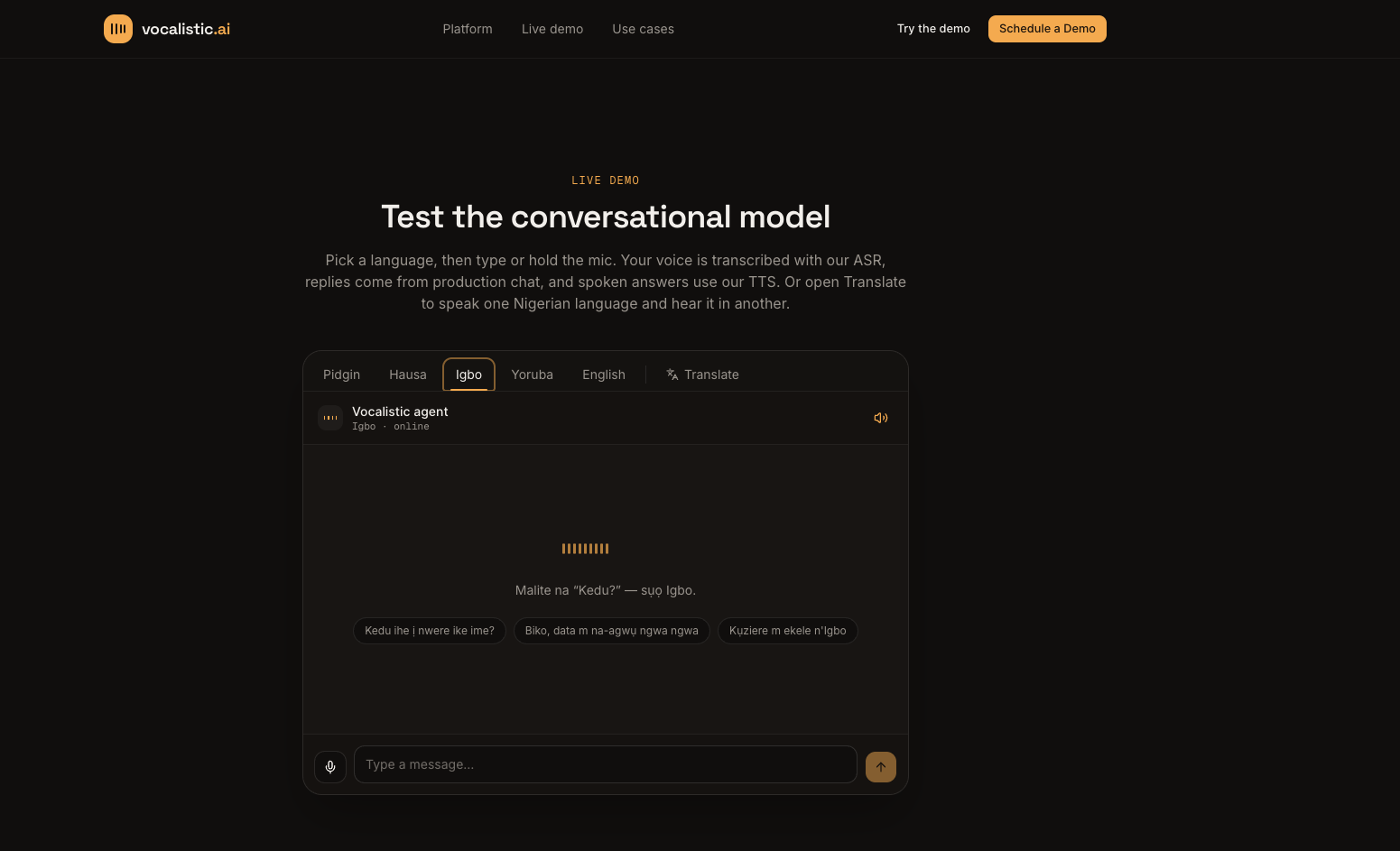
People wey wan explore the platform fit visit the official website and try the live demo.
Website: Vocalistic AI
If the platform fit understand the way Nigerians really dey talk, e fit become one more step towards making AI more accessible to people across Nigeria.
Because technology suppose understand the people wey dey use am—not expect everybody to change the way dem dey talk before e go work.
Open free account to read the rest
E free and e quick. Na only your name and email. Once you enter, you fit read every story for WetindeyTech.

Written by
Adebayo Adeyemi
Enjoy this gist? Make e dey land for your inbox.