
Famasi Africa dey use technology to make getting medicine easier for patients and help pharmacists take better care of the people wey need their services.
The company was co-founded by Adeola Ayoola and Umar Faruq Akinwunmi. Their idea came from a problem Adeola encountered while working in healthcare at the National Hospital in Abuja, Nigeria: getting essential medication fit be stressful, unpredictable, and unnecessarily difficult for people wey already dey manage serious health conditions.
One experience wey stayed with Adeola involved a nine-year-old boy born with HIV. The boy struggled to walk without getting breathless, yet he still had to travel regularly to the hospital to collect his antiretroviral medication.
Antiretrovirals are medicines used to treat HIV.
For Adeola, the situation raised an important question: why should getting necessary medication come with so much stress?
That question helped shape the idea behind Famasi Africa.
Wetin happen?
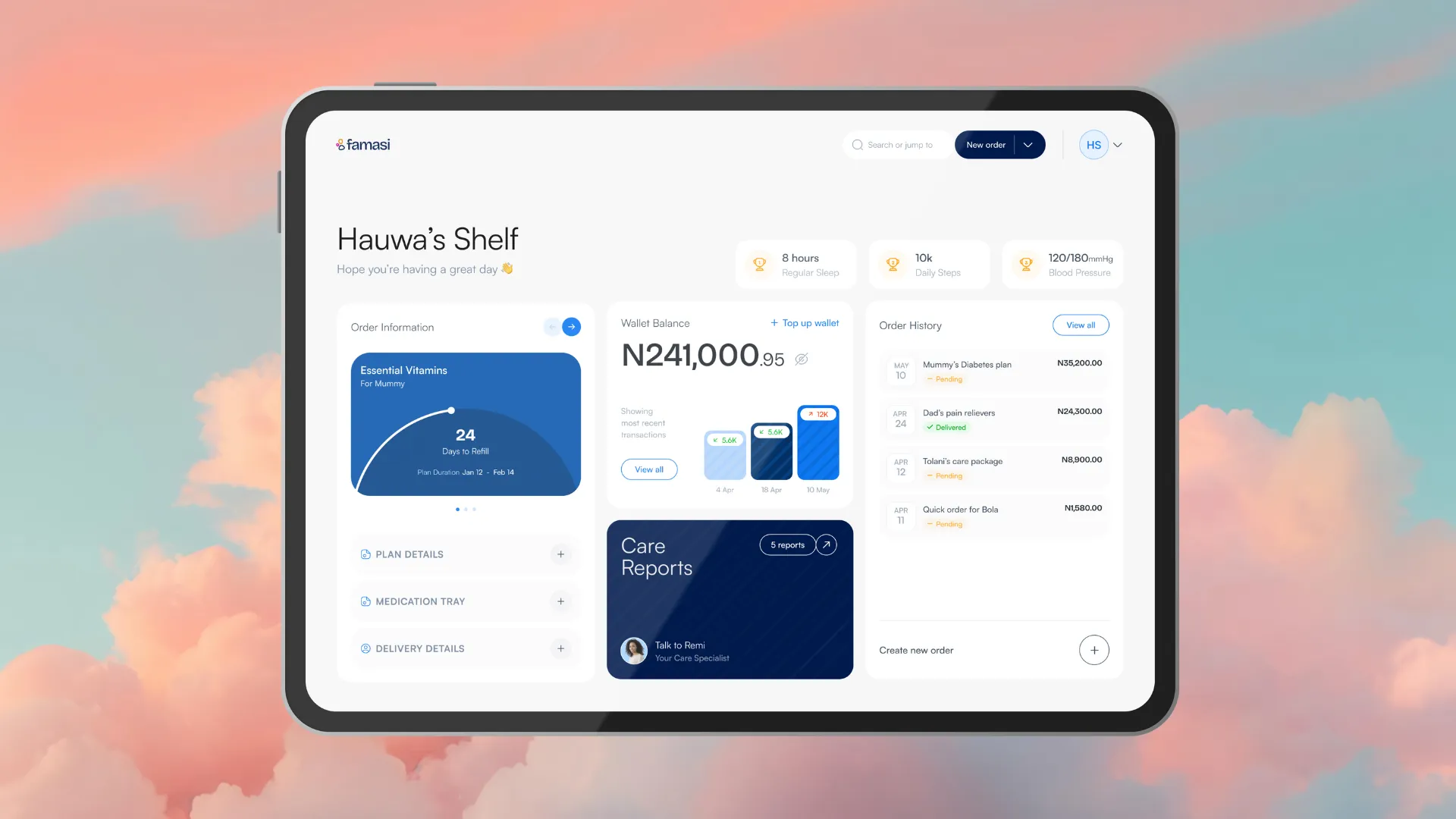
According to Adeola’s account, Famasi started with a simple experiment on social media. The founders asked people whether they would pay for a service designed to make getting their medication easier.
The response came quickly. 133 people replied directly within 24 hours, and the positive feedback helped the company find its first customers.
Initially, the founders handled medication deliveries themselves. But as more people started using the service, the challenges increased.
Customers outside Lagos also needed their medication. Getting medicine from Lagos to Abuja within 24 hours became a serious logistics problem.
The team also handled customer care personally, assigning each customer a care specialist who checked in on them.
This was particularly important for people living with long-term health conditions. Some patients may forget their medication until symptoms return.
By handling these responsibilities themselves, the founders gained a better understanding of what patients needed and where technology could make the process more efficient.
How AI enter the pharmacy matter?
In 2023, Famasi joined the Google for Startups Accelerator: AI-First, a programme designed to help startups explore and apply artificial intelligence to their businesses.
Artificial intelligence, or AI, refers to technology that can perform tasks such as analysing information, recognising patterns, and generating responses.
During the programme, the team explored how AI could help Famasi grow without losing the personal care that made its service valuable.
One result was Remi, an AI-powered pharmacy assistant developed using platforms such as Gemma.
Gemma is a family of AI models that developers can use to build applications.
Remi is designed to help pharmacists understand patients’ needs by guiding an initial assessment, sometimes called triage. This involves asking questions about details such as a patient’s age and symptoms.
The system then uses further prompts to help the pharmacist identify relevant information for providing appropriate care.
The goal is straightforward: help pharmacists serve patients more effectively while making the pharmacy experience more personalised.
However, AI is supporting the pharmacist’s work here. It should not be mistaken for a replacement for qualified healthcare professionals.
The lesson for African founders
Adeola’s experience also shows why founders should understand a problem before rushing to build a complicated product.
Famasi started by doing things manually. Deliveries and customer care were handled directly by the team before they explored how technology could help them scale.
That approach helped the founders understand the real challenges facing patients and pharmacists.
Adeola also explained that you do not need to be a deeply technical person before you can benefit from learning AI skills.
She gradually became interested in programming and machine learning after working across the pharmacy industry. She began exploring how technology could solve problems within the sector she already understood.
She has also seen product designers on her team start building front-end tools with AI.
The lesson? You no need to become a software engineer overnight before you start using technology to solve problems.
For African founders, the opportunity is to identify real problems, understand the people experiencing them, and use the right tools to build solutions that can grow.
Wetin to watch next: Famasi’s journey raises an important question for African HealthTech: how can companies use AI to improve access to healthcare while maintaining patient privacy, professional oversight, and quality care?
Na WetindeyTech, tech gist for Africa. No long thing.
Open free account to read the rest
E free and e quick. Na only your name and email. Once you enter, you fit read every story for WetindeyTech.

Enjoy this gist? Make e dey land for your inbox.